
Stress Counselling in Newton Abbot
Stress Counselling Newton Abbot When You're Heading For Burn Out
Stress is not an inconvenient box you can store under your bed and pretend doesn’t exist. It can be that frazzled feeling that you never quite switch off, or pure burn out – but however it shows up for you, it colours your everyday life.
For some of us, stress trickles in -heavy workload, continual problem solving at work or mentally multi-tasking so much your brain feels like mush. And for others, stress can come out of nowhere when we’re faced with a challenging situation or life change. Counselling help for stress can help to recognise and understand some of the signs that what you’re experiencing is stress.
What are the signs of feeling stressed?
When you’re stressed you might notice physical symptoms in your body. Tight shoulders, headache, heart palpitations or perhaps that exhausted feeling that won’t shift even if you’ve had enough sleep. Stress can play on your emotions too: feeling frazzled, snappy, teary, overwhelmed or finding it hard to concentrate or make decisions.
Stress counselling can help you pump the brakes and understand what your engine is doing- to identify those particular events that rev you up, recognise exactly how your body and mind reacts, and find small, practical steps you can take to help you feel more settled and grounded again.
How Does Stress Affect Your Body?
When you’re stressed, your body goes into fight-or-flight mode. You’ll feel your heart pumping and your senses becoming sharper – your body is flooded with hormones including adrenaline and cortisol. This is great if you need to run away from a bear. But horrible if you’re constantly stressed and your body thinks you need to run away or stand and fight all the time.
Consistent high stress weakens your body and mind’s foundations.
Physical & emotional effects of stress
Physical Impact: Stress that stays unexpressed can make you feel achy all over, cause stomach upsets (IBS, heart burn), headaches, high blood pressure and a weaker immune system. You catch every cold. Your heart is racing while you’re sitting down.
Brain Drain: You can’t concentrate. Making decisions feels laborious. You can’t remember things and your inner judge is shouting criticisms or worrying about everything inside your head.
Behavioural: You snap at people. Stop socialising. Can’t sleep or wake up tired. Drink alcohol, smoke or caffeinate to try and feel ‘normal’ again.
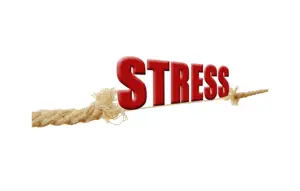
You feel like you never ‘switch off’, like a over stretched rubber band.
What's The Difference Between Stress and Anxiety?
You experience stress when you react to a specific pressure. For example, work deadlines, money problems, life changes.
These things don’t feel good but stress is your body’s natural reaction to pressure. Stress can sometimes be helpful by allowing us to stay motivated (like when we need to meet a deadline).
Anxiety is your body’s natural reaction to feeling threatened or unsafe. Like stress, anxiety can cause similar symptoms that affect your mind and body.
Feeling anxious in stressful situations is normal. But sometimes anxiety can continue even when the danger has passed or there isn’t an obvious threat. Anxiety can feel like constant worry, dread or uneasiness but unlike stress, anxiety doesn’t go away so easily. If left untreated, it can stick around and affect your day-to-day life, relationships, confidence and wellbeing.
Anxiety V's Stress
You may experience stress and anxiety at the same time. That’s because many things that cause stress can also trigger anxiety.
Long-term stress can then lead to anxiety. Someone who has experienced long periods of stress without enough time to recover may find they develop anxiety.
Stress and anxiety affect your nervous system in similar ways. This is why they can both produce similar symptoms.
To read more about the symtoms and effects of anxiety, jump to the anxiety page.
You can read more about how anxiety and perfectionism are linked here
Why Do I Get Stressed?
Stress is your body’s response to demands. Everyday pressures. Deadlines at work. An argument with your partner. Stress is very individual – what you might breeze past, someone else might find debilitating. It’s about how your mind perceives the threat and whether you believe you have the resources to cope with it.
We tend to think about acute stress versus chronic stress. The former is short term and usually tied to an event or period of time. Chronic stress is the ongoing, relentless stress that leaches your energy and makes you feel like you can’t change your situation.
Helping You Understand Stress
Stress counselling breaks down that awful, heavy feeling stress can bring into smaller chunks. We may work on:
Triggers: Identifying the immediate people, events or demands that set you off.
Loop: Stress often includes a pattern of negative self-talk (“I’m so rubbish” “I can’t do this”) that amplifies a problem that may actually be quite small or solvable.
Price: Identifying what your stress is costing you – your sleep, your temper, your body.
How Does Therapy Help with Stress?
Stress counselling can give you the tools to help you feel less…stressed. It won’t magically make all your deadlines disappear. But it can help your body learn how to switch off and recover when the danger has passed.
Some things we may work on:
Learning to Identify: We can work on identifying and challenging the critical or unproductive thinking patterns that contribute to your stress responses. Once you can recognise these thought patterns, you can begin to take the power away…
Break The Cycle: Practicing breathing techniques and deep relaxation exercises (such as Paced Breathing) that can help to tell your nervous system there is no danger and directly decrease your heart rate and muscle tension.
Change Your Response: We’ll explore the situations that are triggering your stress and practice different ways to respond to stressors. You can build new coping skills that work for you.

How To Get help with Stress
Stress can leave you feeling exhausted and drained. It can feel overwhelming just thinking about sorting out how you deal with stress and ways to cope.
Asking for support is allowing yourself to realise that things aren’t working for you and have become too much to deal with. When you take that first step to recognise it, we can look at what’s happening for you and consider how we can find some resolution.
I provide a safe and nurturing environment. There are no agendas or expectations. Instead of telling you what to do. I will listen to you. And ask questions. Questions that may help you see your situation in a different way. I can help you find your own answers to feeling more refreshed and rejuvenated.
Click below to contact me and book a free consultation to see if working with me, either from Newton Abbot or online is right for you.
Have A Question?

Read more about how stress can affect you on my stress blog page
You can find frequently asked questions about Counselling – visit my FAQ page
Or you can read more about how I work with clients – visit my About page