
Understanding the January Blues: Newton Abbot
The fairy lights come down, the bills arrive, and suddenly you’re staring towards February through a grey window, wondering why you feel totally flat
This is January. Not the Instagram version with yoga mats and juice cleanses. The real one, where you’re too tired to care about self-improvement and too broke to pay for a gym membership.
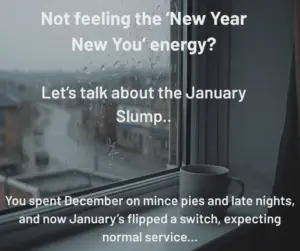
Your body is probably a bit confused. For weeks it filled up on mince pies and stayed up late watching festive telly. Now January has flipped a switch and is expecting normal service to resume. Meanwhile the sun sets at half four and your bank account is wiped out.
What Are the January Blues?
True, it can be about circadian rhythms and serotonin levels—reduced daylight throwing your internal clock out of sync. But it may be also true that you spent December running on fumes and fairy lights, and now your tank is empty.
People call it the January blues -not a diagnosis, but the name we’ve given to that flat, grey feeling that settles in after the decorations come down.
Blue Monday: Myth or Reality?
We hear in the media this idea that the third Monday in January is scientifically the most depressing day of the year. It as a PR stunt for a travel company. The whole thing is manufactured, but that said—people do feel rotten in January. The marketing story doesn’t invalidate the lived experience. You can know Blue Monday is made up and still wake up feeling like soggy wrapping paper.
January Blues vs Seasonal Affective Disorder (SAD)
Seasonal Affective Disorder is different. SAD isn’t just feeling a bit down because it’s dark and cold. It’s depression that arrives with the season and leaves when spring does, affecting roughly one in fifteen people here.
The difference: your low mood doesn’t lift after a decent night’s sleep or a walk in what little daylight we get. It settles in like a houseguest who won’t leave. You lose interest in things that usually matter. You oversleep but wake up exhausted. Your brain feels like it’s wading through porridge.
This isn’t about motivation or toughing it out. It’s brain chemistry responding to lack of light. If this sounds familiar, it might be worth talking to your GP. There are treatments—light therapy, talking therapy, medication—that genuinely help.
The Pressure of “New Year, New Me”
January arrives dragging this enormous suitcase of expectations. Lose weight. Get organized. Be productive. Optimize yourself into some shinier, more efficient version of you.
You don’t have to buy into any of that.
You might not need an overhaul. You might just need a break. For many, whilst Christmas may be enjoyable, it’s not relaxing. Spending a month shopping, decorating, cooking, entertaining and showing up as your most festive self can be exhausting. So the pressure to then transform yourself in January when you’re running on empty, can feel crushing. Mind—the mental health charity—recognises this, but the message can get drowned out by the noise of new year fitness and healths transformation programs.
Rest isn’t failure. Slowing down isn’t giving up. Sometimes what you need most is to acknowledge you’re tired and give yourself permission to just… stop.
Practical Ways to Support Your Mental Health in January
Instead of resolutions, maybe try boundaries.
Saying no to things.
Going to bed early without guilt.
Spending an evening doing nothing productive whatsoever.
Winter is a season that asks for dormancy. Trees aren’t frantically trying to grow in January. Hedgehogs aren’t setting goals. You’re an animal too, and the dark months are for conserving energy, not burning through it.
Connection can help more than you’d think. Not forced socializing, but reaching out to someone who gets it. A friend who won’t try to fix you. A counsellor who’ll let you talk without jumping straight to solutions.
When to Seek Support
January is hard. The blues are real even if Blue Monday isn’t. You’re allowed to feel slow and quiet and not particularly optimistic about the year ahead.
If the low feeling persists beyond a couple of weeks. If you’re struggling to function—not just dragging yourself through the day, but genuinely unable to manage basic tasks. If you’re withdrawing from everyone and everything, or if hopelessness starts feeling permanent rather than passing.
Support exists if you need it. Needing it doesn’t mean you’ve failed. It means you’re human, and humans aren’t built to sprint through winter pretending everything’s fine. Counselling services can offer space to untangle what you’re feeling without judgment. This isn’t about ‘fixing’ yourself. It’s about having support while you figure out what you need.
Be kind to yourself in 2026
Samantha x
If you’re looking to untangle challenges your facing and find a path to firmer ground, I offer a counselling in a space that’s professional but human, gentle but honest. Find out more about how I work on About and Counselling Services pages. Or get in touch on Whatsapp

Samantha@ Candlewood Counselling | Counselling in Newton Abbot (TQ12) and online. Contact Samantha here